
Professional Stalker
The experiences of a former private investigator and process server.
Audio for the Behavioral Detective Podcast

Play on Spotify or Play on Apple for today’s newsletter.
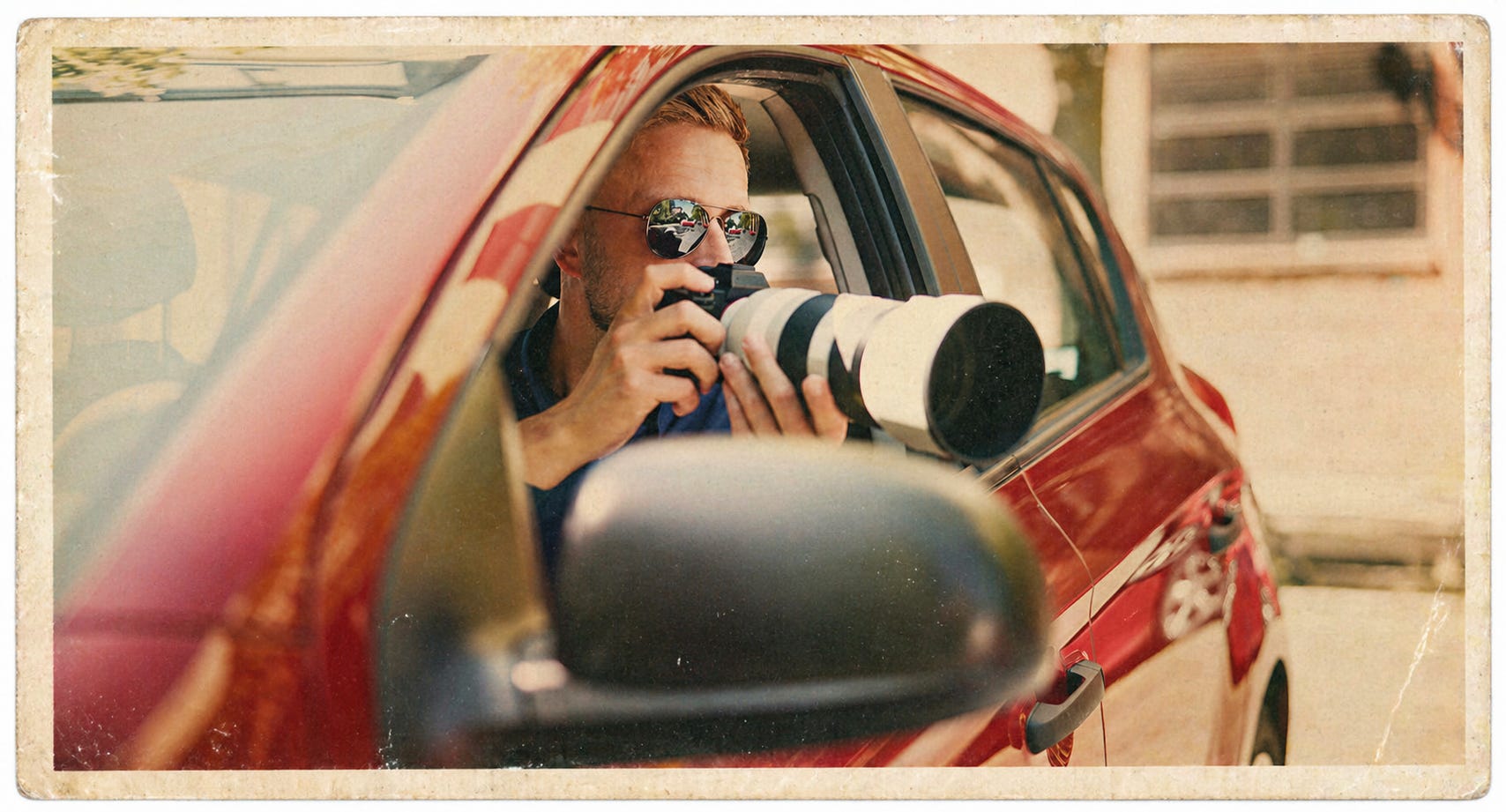
I’ve seen the same shows you’ve seen, read the same books you’ve read, where the police or a private investigator conducts a surveillance (an old fashioned stakeout) and, frankly, they look kind of cool. Admittedly, there is a certain thrill we attach to honorably be watching someone to catch them doing something they probably shouldn’t be doing.
When I was a new investigator/process server, the thrill was the mindset I had. But after having been a part of countless surveillance situations, let me tell you what I learned.
Professional Stalker
First, and there is no way around this, I was a professional stalker.
I was there to watch people at the intersection of their public and private lives.
Think about it. If you give it long enough, can anyone’s life stand up to that kind of scrutiny? Human beings are complicated. We often have relationships with people or food or interests we know are bad for us, and we do it anyway.
In our society, we look down on stalkers and we send them to jail when we can. Yet perfectly normal people in our modern world think nothing of clicking down one too many links on someone else’s life.
“Oh, look at their vacation.”
Followed by, “Where was that?”
Followed by, “Who is that with them?” Click.
Followed by, “Well, where do they live?” Click
It’s the same surveillance behavior, albeit more curated, volunteered, and socially acceptable. Expected, even. But still.
Face it, social media fills a certain voyeuristic need.
My Body Has Needs
Watch any cop on surveillance on any screen and we will see him (or her) drinking bad coffee and eating some cheap food. Let me tell you about that.
It only takes one surveillance to learn that you don’t eat or drink during a stakeout.
If you do, unless you have the bladder of a camel, you will need to use the restroom sooner or later. We either need to carry a bladder bottle with us (and hopefully disinfectant wipes) or get out of the car and pee on a tree (not usually reasonable in a suburban neighborhood) or leave the scene while hoping your subject doesn’t move on without you.
That’s not something you want to explain to your client.
Absurd, right?
Maybe I’m over-sharing, but I have decreased kidney function and I have known that since I was in my mid-forties. Did it have anything to do with sitting in a hot and humid car in Washington, DC summers without drinking enough to stay hydrated because twenty-something me thought it better than having to leave and find a bathroom?
I don’t know. But I suspect. Correlation and causation are not necessarily the same. But, you do the math. Because sixty-one-year-old me does it every day.
Basic Surveillance Skills
I spent a number of years as a professional photographer. In fact, those years overlapped the end of my process server career and the beginning of my real estate career. That’s because…
I was taught how to use a camera with long lenses and high-speed film to take pictures of people doing things they shouldn’t be doing.
See how this works?
Then there is the skill of documentation. When you sit in a witness box next to a judge with dozens of faces staring right at you answering a question under oath, which I have done many times, you are more believable if you have notes.
7:16 pm – AAS (Arrived at scene)
7:33 pm – SLIF (Subject left, I followed)
8:01 pm – A (Arrived) at Wilson’s nightclub.
8:11 pm – Viewed making contact with woman, brunette, 5’4”, 115 pounds.
9:22 pm – Followed to local hotel.
Judges and juries love handwritten notes. Attorneys for the defendant, not so much.
Be Charming and Then Be Gone
Do enough surveillance work and you will be “made.” We don’t usually get to see this in the movies or hear it in the notes of your favorite true crime podcast.
I’ve talked to a dozen cops about my “right to be here,” showed my PI license and then moved on. Because once you are burned, you are burned.
Surveillance is expensive to the client and there is no sense in sticking around to anonymously observe if the local nosy-neighbor has announced to the entire neighborhood that you are there by having sent in the police.
Don’t think that really happens or couldn’t happen to your favorite private investigator on television? Think again.
Romance v Reality
I loved being a private investigator and process server. It was exciting, I was good at it and I’ve been telling stories about my experiences for going on forty years.
I also hated being a PI. Because watching people takes a toll.
Ever rung a doorbell with exceedingly bad financial news (a summons that will allow a lawyer to crawl way up inside your finances) and find the person who opens the door is someone you see on a regular basis?
Awkward.
But that’s the actual job.
Where in your life have you had a love/hate relationship?
Chris Lengquist
A Chris Writes, LLC Publication
Not legal advice / not professional guidance / do not imitate tactics
Fictionalized/composite/altered details + no identification intended
Read full legalese here
My job as a paramedic is similar. I love the job and helping people, I hate the death and “bad things happen to good people” aspect. Every call I take as a dispatcher or in person as a paramedic changes someone’s life.